

On Friday, May 8, 2026, the school children of St. Margaret of Scotland Catholic School enjoyed the annual Field Day, run by the faculty and parents. This year, as an added treat, the St. Louis Blues mascot, Louie, joined St. Margaret’s own Scottie The Dragon, to entertain the students during the event.
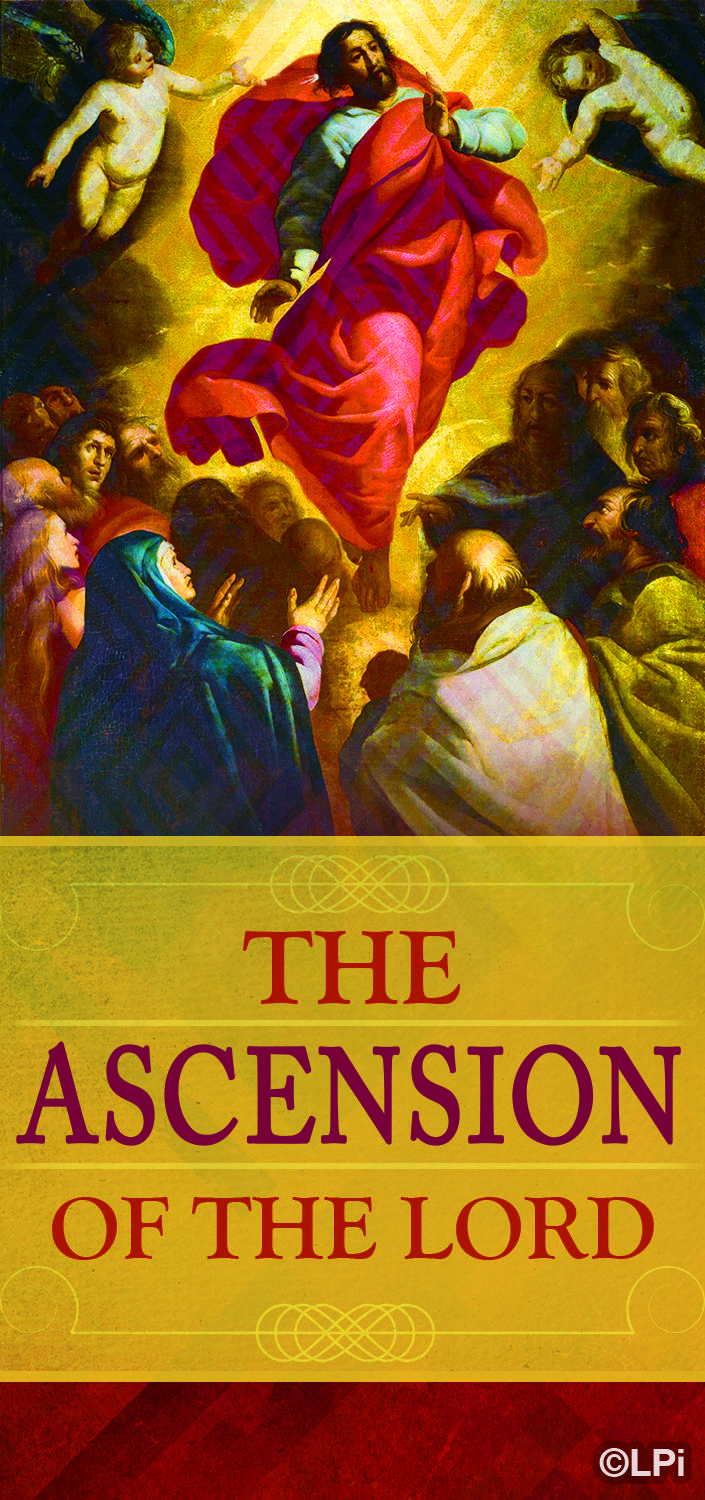
Seventh Sunday of Easter – The Ascension of the Lord
Baikauskas,
Associate Pastor
~ Every year at this time, as the academic year winds down, some of those we have come to know and love move on — students finishing degrees, young people leaving for new adventures. Their going leaves a real hollowness, even when we know it is for the best. I think this is something like what the disciples felt who had loved Jesus so much. What could ever fill that emptiness?
This is something hard to explain, though we experience it daily. Just over twenty-five years ago, in the space of a few months, my father and twin brother died. Initially what I felt was great pain, helplessness, the loss of an important connection, and the finality of something for which there was no preparation. There is nothing warm, initially, in any loss, death, or painful goodbye.
But time is a great healer. After a few years, I no longer felt the hurt. Their absence had turned into a warm presence. The heaviness gave way to something else deep in my soul. Their seeming inability to speak to me became a surprising new way of having their words in my life, and the blessing they were never fully able to give me while alive began to come more deeply into me. My sadness turned to something else, and I began to find my father and brother again, in a deeper way. They had ascended — and I was better for it.
We often have this kind of experience, simply in less dramatic ways. Parents say goodbye to their children when they leave for school or get married. An ascension has to happen; an old way of relating has to die, and it can be as painful as death itself. Yet it is better that they go away.
In today’s Gospel, Jesus prays not for the world but for those the Father has given him — his friends, his community, the ones who have kept his word. “I am no longer in the world, but they are in the world.” He is already speaking from the threshold of departure, and his prayer is not one of abandonment but of consecration. He is entrusting them to the Father precisely because he is leaving. The going away is itself an act of love.
And in the first reading, he tells them directly: “You will receive power when the Holy Spirit comes upon you, and you will be my witnesses to the ends of the earth.” The immense love of the Resurrection was to be poured into them and called the Holy Spirit. Jesus would continue to be alive in the world — but in a different form: in their bodies, and in ours.
In the Eucharist we celebrate each Sunday, we take his body and blood into our own. The Spirit helps us receive his whole life, death, and resurrection as they settle into us and into those around us. Loss and absence are turned into real presence.
Presence depends upon absence, and there is a blessing we can only give when we go away.
That is why the Ascension is not a tragedy. It is a threshold. The old way of being together had to end so that something deeper could begin. There will be sadness now — but that sadness will turn to joy.